




A door plug leaving the side of a 737 MAX in midair makes for a headline. A contract for an aerial refueling tanker or an attack helicopter does not. That asymmetry explains why Boeing’s defense business gets so little attention while the commercial side keeps absorbing all of it.
Yet the defense unit is a large part of what has kept Boeing running while its commercial jet operation works through production caps, quality scrutiny, and a long recovery. It is not a clean success story, and it has produced its own losses. But when one half of a company is waiting on regulators and the other is working through multi-year government contracts, the second half starts to look like ballast.
Two Businesses, Two Different Clocks
Commercial aviation runs on airline demand, delivery schedules, and regulatory permission. Boeing can have thousands of aircraft on order and still be unable to turn them into revenue if the FAA limits how many 737s it can build each month. After the January 2024 door plug incident, the regulator capped 737 production at 38 aircraft a month, and that ceiling has shaped Boeing’s cash flow ever since. A plane that cannot be delivered is inventory, not income.
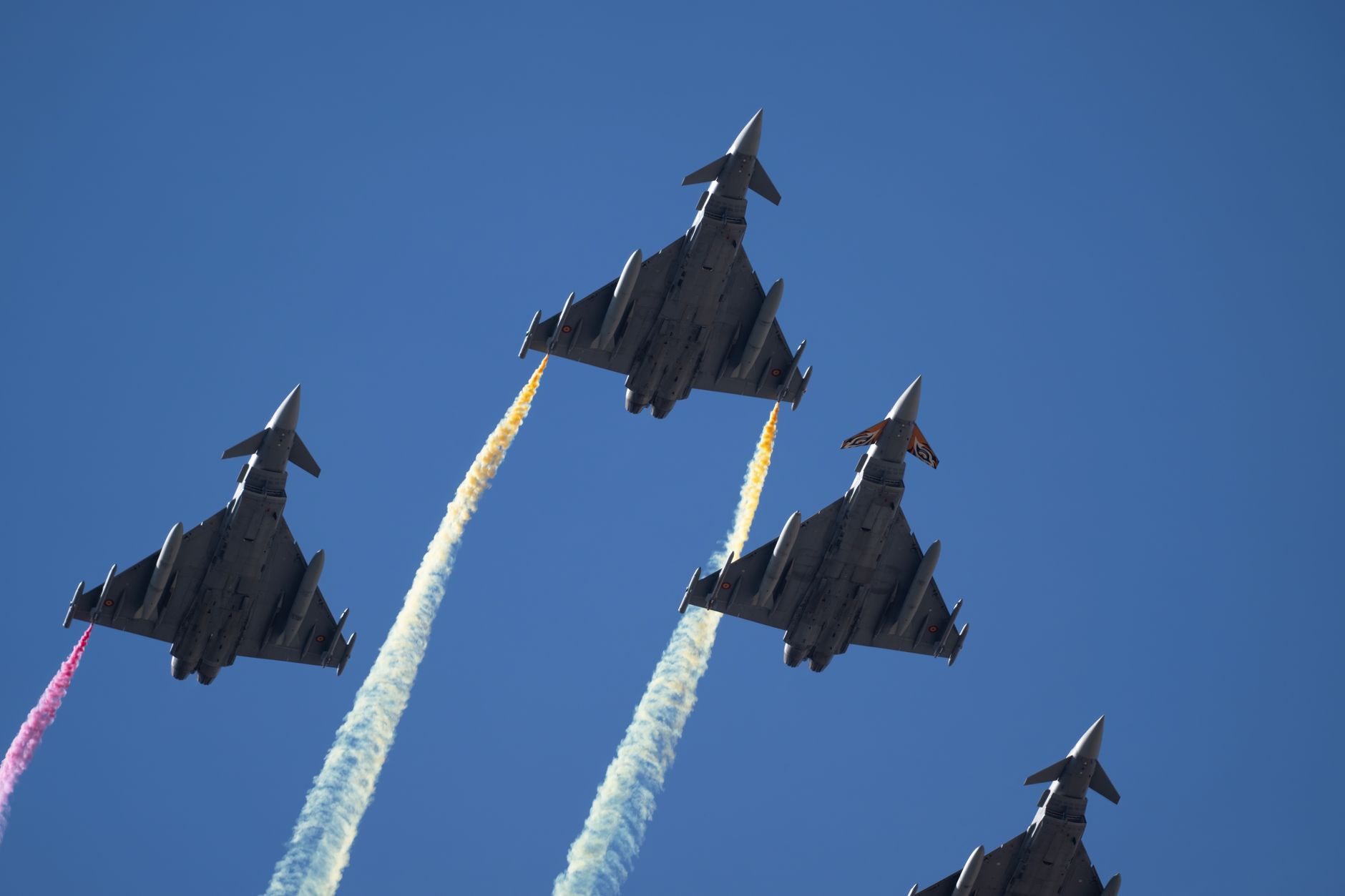
Defense runs on a different clock. The customer is mostly the US government, and the money moves through appropriations, multi-year contracts, and milestone payments rather than airline financing cycles. Programs like the F-15EX, the F/A-18 Super Hornet, the Apache, the Chinook, and the P-8 Poseidon sit inside budgets that lawmakers set years ahead. A bad quarter for the 737 does not change what the Pentagon plans to buy.
That is the structural reason the segment acts as a stabilizer. It does not need an airline to feel confident, and it does not need a certification decision to ship product. Its risks are real, but they are of a different kind: cost overruns, schedule slips, and political fights over budgets. Those rarely arrive overnight in the way a grounded fleet does, which gives management more room to plan around them.
The Fixed-Price Hangover
Calling defense the safe harbor oversimplifies things. Boeing signed several fixed-price development contracts that required it to absorb cost growth, and the bill has come due repeatedly. The KC-46 tanker, the T-7A Red Hawk trainer, the MQ-25 carrier-based drone, and the VC-25B presidential aircraft have each produced charges that weighed on results.
So the defense unit has been steady in the sense that demand is dependable, not in the sense that margins are. The business has sometimes lost money on work it was proud to win, and that history colors how any recovery should be read.

The F-47 Win and the Limits of the Rescue
The clearest sign of where Boeing’s defense ambitions are headed came in March 2025, when the Air Force picked the company to build the F-47, its sixth-generation fighter. The award matters less for near-term revenue than for what it does to the company’s identity. Boeing had not won a major crewed fighter competition in decades, and losing the previous round to Lockheed Martin’s F-35 left St. Louis wondering how long its fighter line could last. A franchise-scale program restores a horizon for engineers and suppliers that the Super Hornet and F-15EX lines could not provide on their own.
The contract also carries a warning. A development program of that size, run by a company with a record of fixed-price stumbles, invites the same cost pressures that dented the tanker and trainer programs. Contract structure matters as much as the win itself. If Boeing priced the work aggressively to beat rivals, the early years could drain cash before the production phase generates returns. A prize that arrives with margin risk is still a prize, but it is not a rescue.
Labor is the other pressure point. Boeing’s commercial workforce went on strike in the fall of 2024, and in August 2025 machinists at its St. Louis defense sites walked out as well, putting fighter and munitions production directly in the path of a dispute. That undercut the idea that defense sits insulated from the company’s wider troubles. The same relationships between management and the shop floor that strained commercial output could slow work on military programs, and the government customer is not known for patience with delays.
What the defense unit offers, then, is time rather than salvation. It brings in revenue on a schedule the commercial side cannot match, and that gives the company room to fix the 737 line without a crisis of confidence. Whether that room gets used well depends on execution in Seattle and Charleston as much as in St. Louis. The Air Force has talked about a first F-47 flight in 2028, and by then Boeing will be judged on whether the 737 line it was trying to repair in 2025 is running at the pace its customers were promised.